Design Categories
B2B Enterprise UX · IoT Platform
Industry
Renewable Energy · Robotics · IoT
Role
Product Designer ( 0-1 System )
Duration
2 months
Skills
Figma · Midjourney
*The hi-fi was finalized by my own since my internship was end before they finalize it.
Background
As solar operations scale, a centralized O&M system is essential to monitor devices, coordinate tasks, and respond to issues at scale.
Solar Scale Grows
more sites and more devices are creating O&M pressure that manual operations can no longer absorb.
Solar installations grew
~200%
from 2022 to 2023
Cause Lost
$5,720
per year
Operations become distributed and complex
Lost per MW annually due to equipment underperformance in 2024 — up 5× in 4 years
A management system becomes necessary
Industry best practice requires 80% proactive vs. 20% reactive maintenance.
80/20
Maintenance Ratio
Problem Statement
Operating solar panel cleaning systems at scale introduces several challenges:
Business Challenge
UX consequence
Distributed operations
“Solar plants are spread across different locations, so managing devices is difficult.”
"Operators cannot see device status, task progress, and site conditions in one place."
Delayed response
"In remote or harsh environments, slow maintenance can cause safety risks and downtime."
"Important alerts are easy to miss when they are not clearly prioritized."
Inefficient Monitoring
"As more robots and sites are added, manual tracking becomes slow and inefficient."
"Operators need to switch between many devices, tasks, and statuses, which increases mental load."
Poor data readability
“Without a clear view of operations, teams cannot find problems or make decisions quickly.”
“Too much data on the screen makes issues harder to spot and respond to.”
My Role
In this project, I participated these key duty:
Competitive Analysis
Delve into the marketing research of RV cleaning robots, and field research the persona of operators.
All Designing Phases
Early research synthesis
Signup
end-to-end UX design
Signup
Prototyping
Signup
Brand website
Signup
Feature architecture
Signup
Cross-team Alignment
Signup
Collaborate Cross-team
+2
UX Designer ( incl. UX mentor)
+15
Engineers (hardware & software)
+3
Industrial Designer
Facilitated cross-team alignment and iterative design reviews across a 15+ person engineering team to ensure the O&M system UX aligned with hardware constraints and development requirements.
Ideate
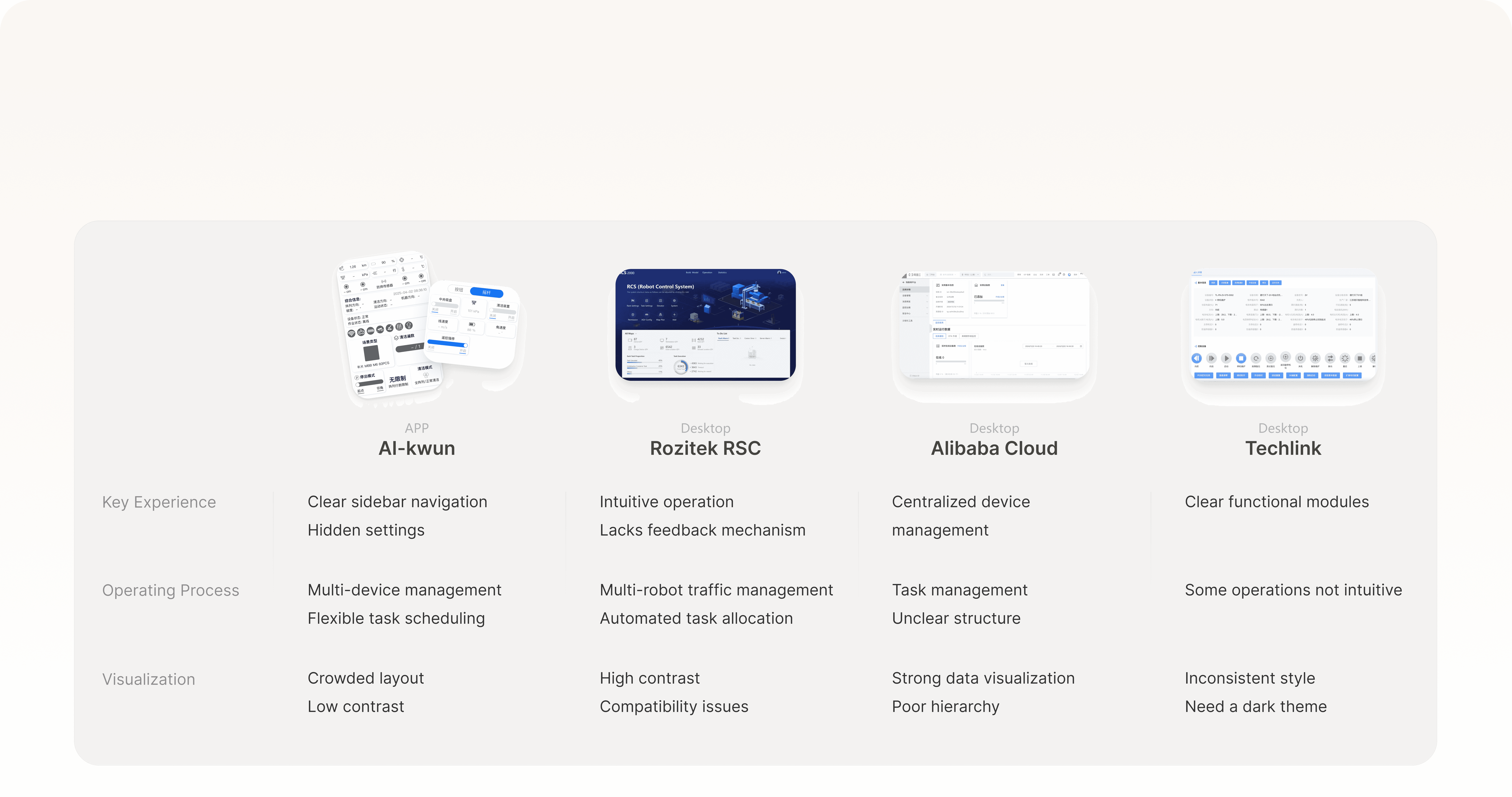
Competitive Analysis
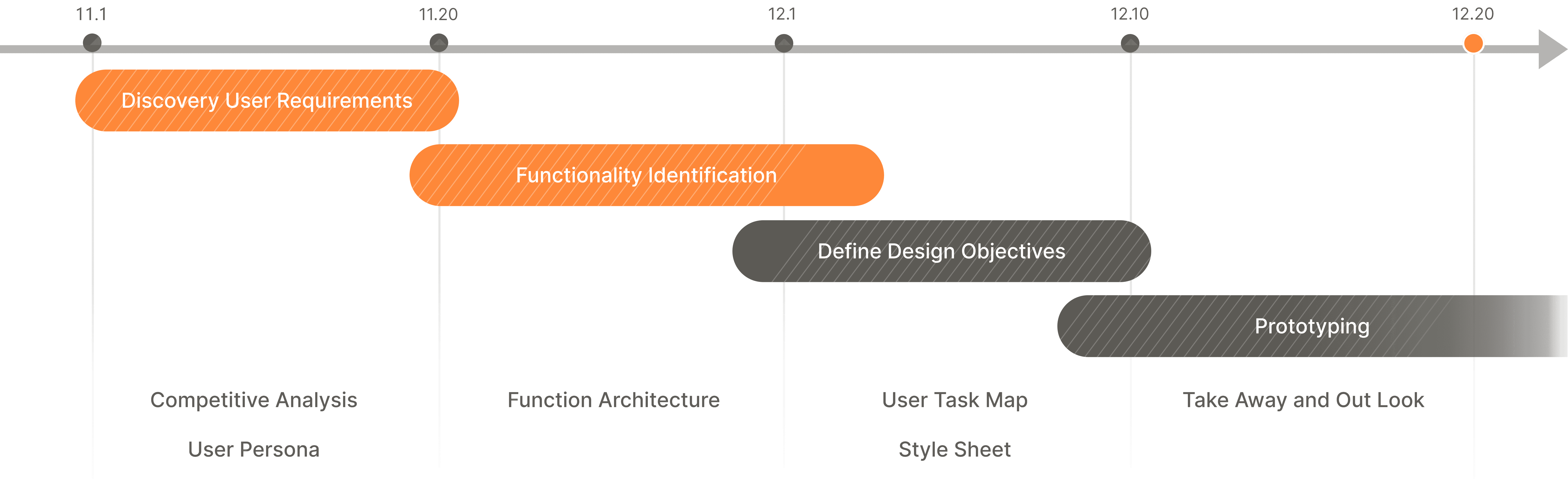
After getting familiar with the currently developed robots, I conducted a competitive analysis to understand the relevant industry landscape.
Empathize
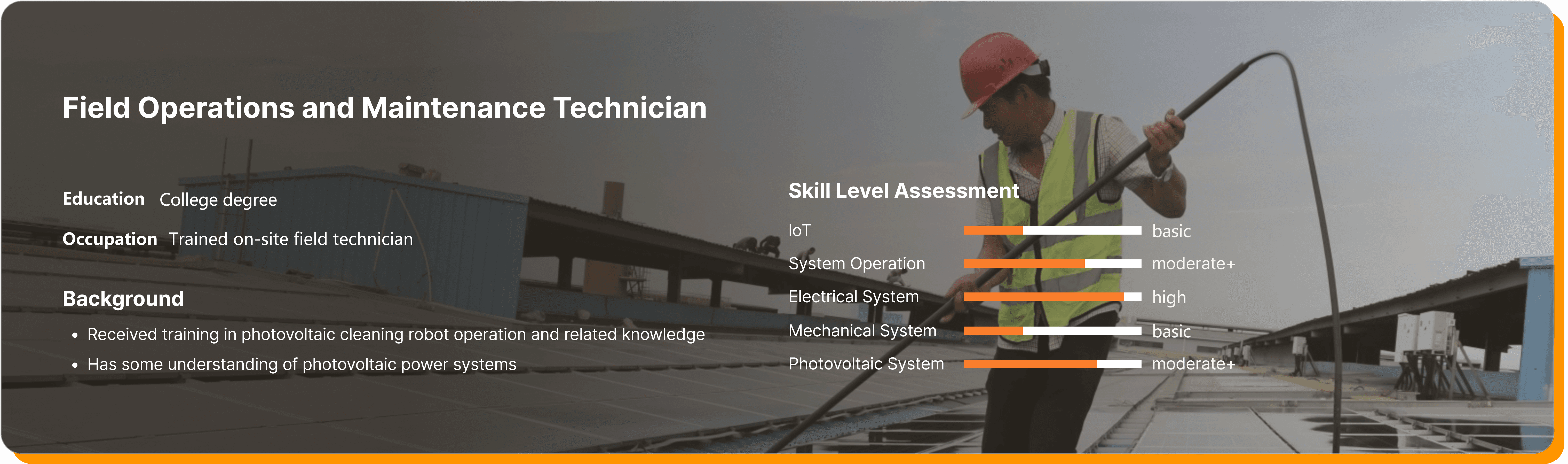
Field Research
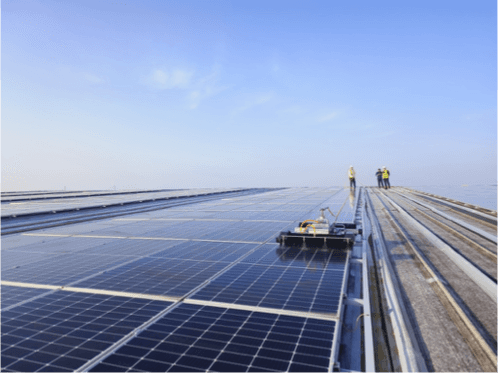
To obtain authentic user insights, we conducted on-site research at the power station and studied the manual cleaning workflow of solar panels.
Manual Cleaning Workflow

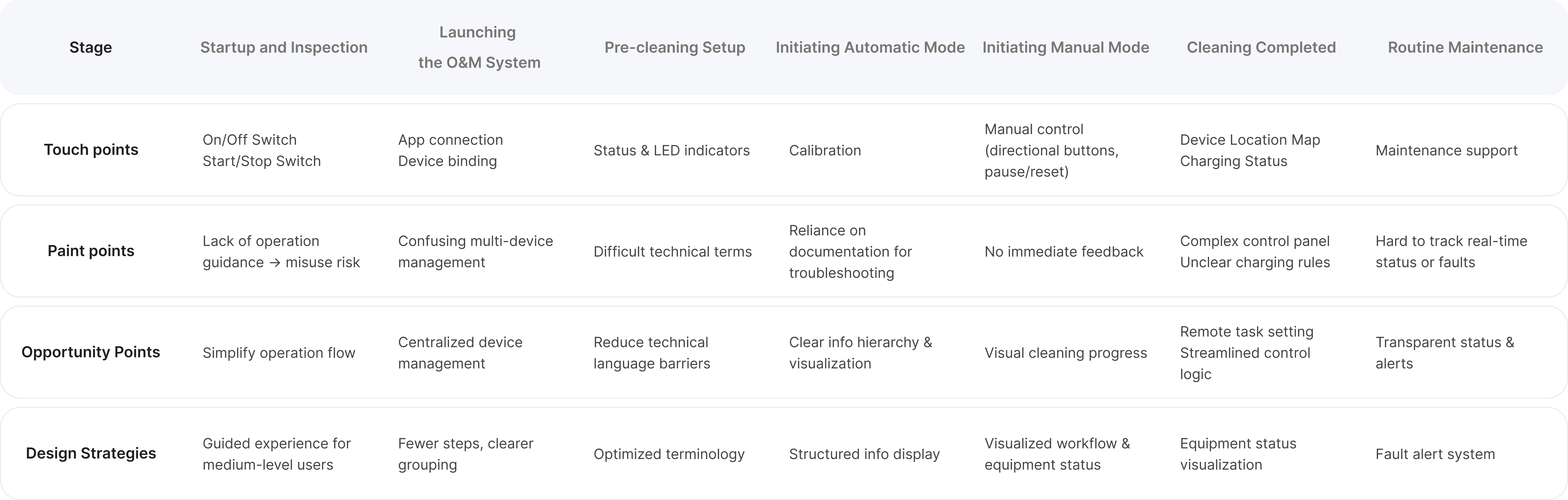
User Task Map
Key Insights
Operators rely on manual monitoring instead of system support
Leads to high cognitive load
Alerts lack hierarchy and prioritization
Critical failures are overlooked
Workflows are fragmented
Tasks require too many steps
Information is not scannable
Users cannot quickly assess system status
Design Strategy
Based on the insights, I focused on three key dimensions: structure, skeleton, and surface layers.
structure

Simplify Workflow
Reduce steps and streamline task execution to improve efficiency.
Skeleton

Information Readability
Enable skimming and decision-making through structured data visualization.
Surface

Intelligent Assistance
Support operators with alert prioritization and real-time feedback.
Feature List
After aligning, we collaborated with the product manager and developers to finalize the feature list.

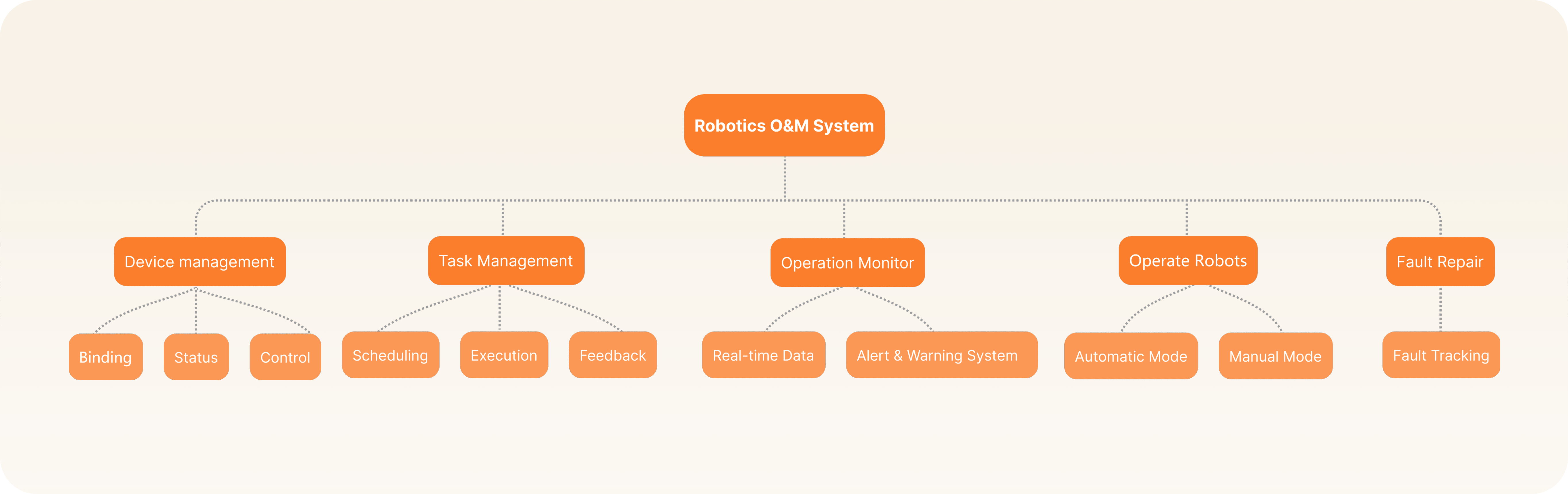
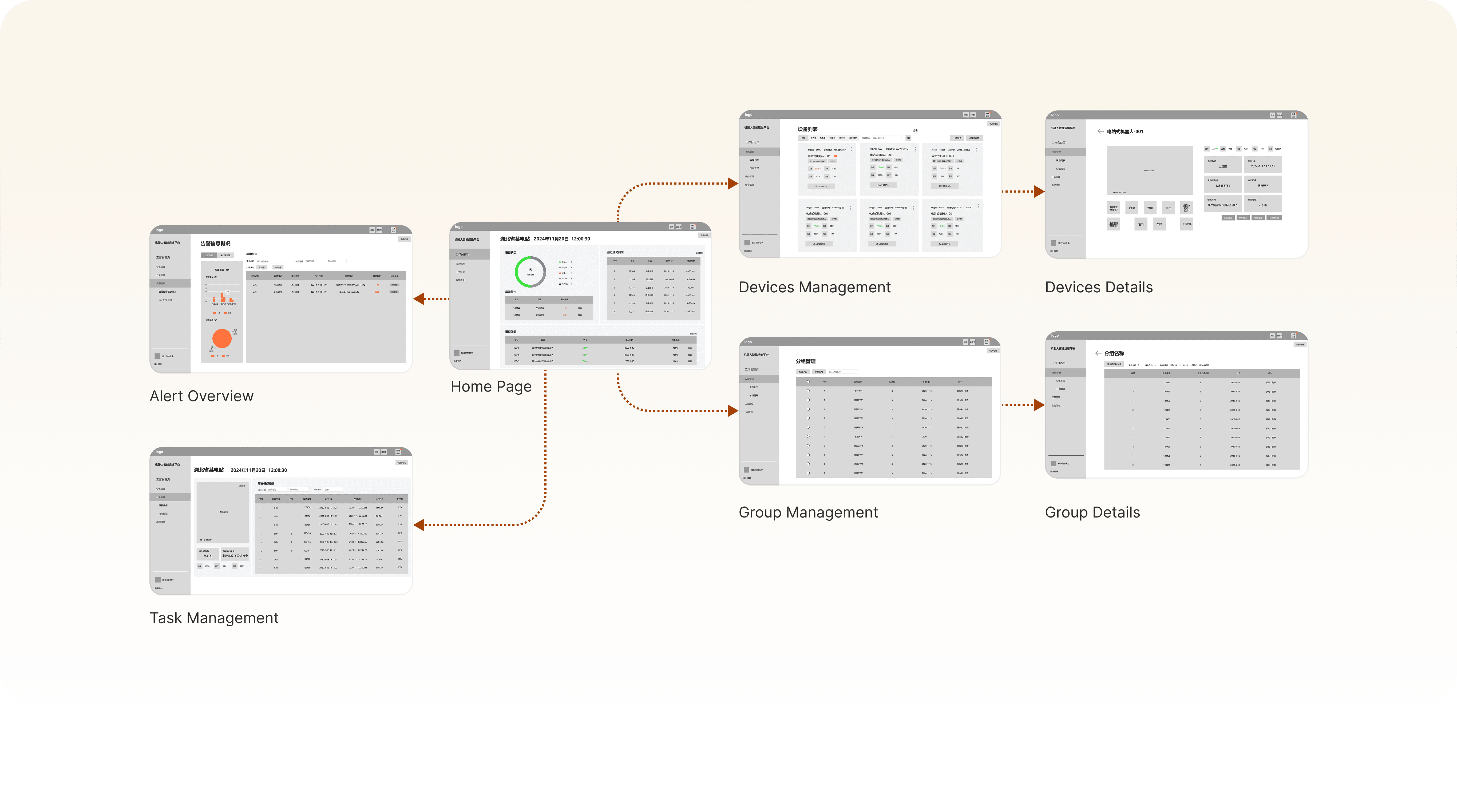
Information Architecture
I built the functional architecture based on usage-scenario workflows, using the feature list we organized during the meeting.
Design Solutions
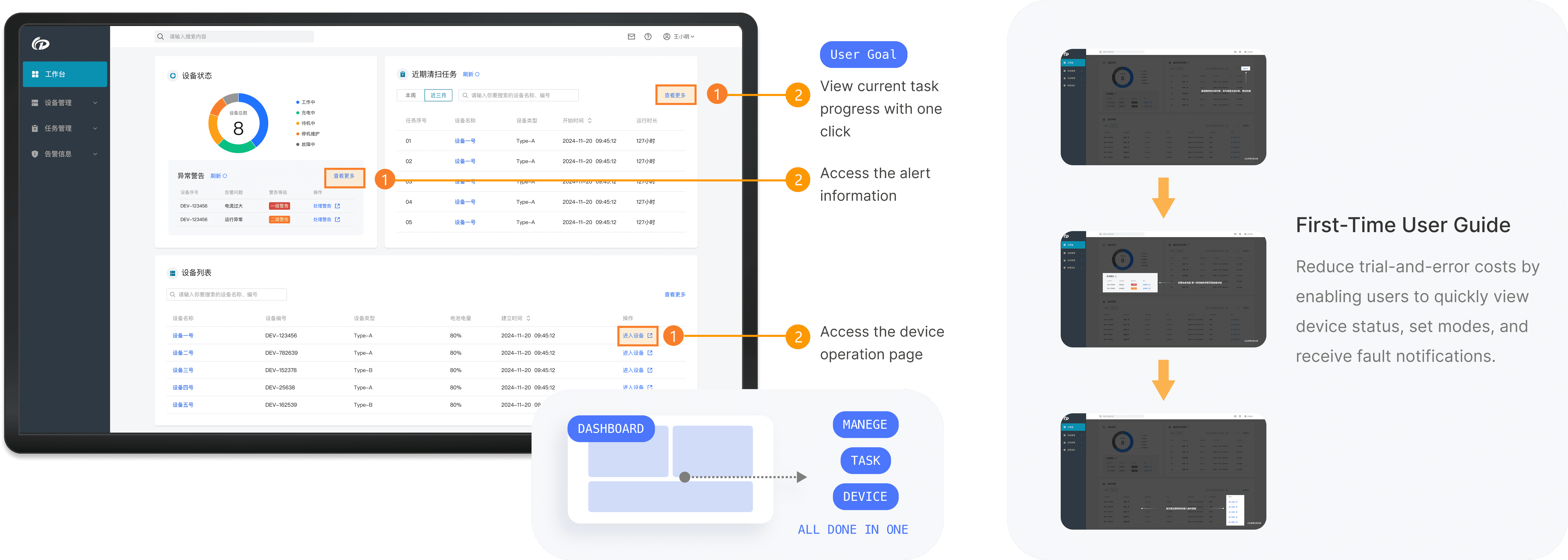
#01 Minimal Task Workflow
Why: Optimize Shorter Operation Steps via In-Depth Competitor Research
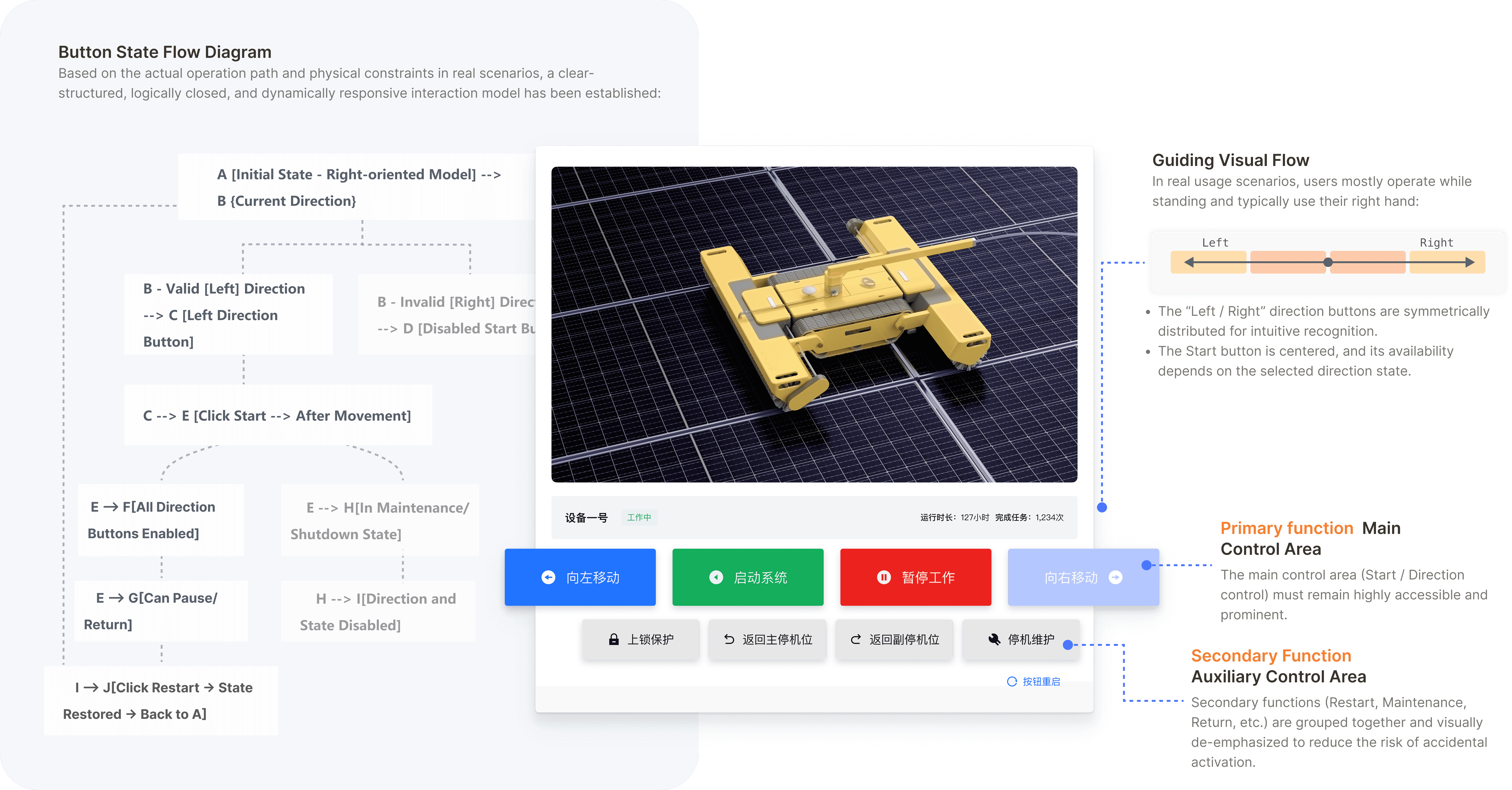
#02 Information Readability
Why: Reduce the cognitive workload to ensure safety operation
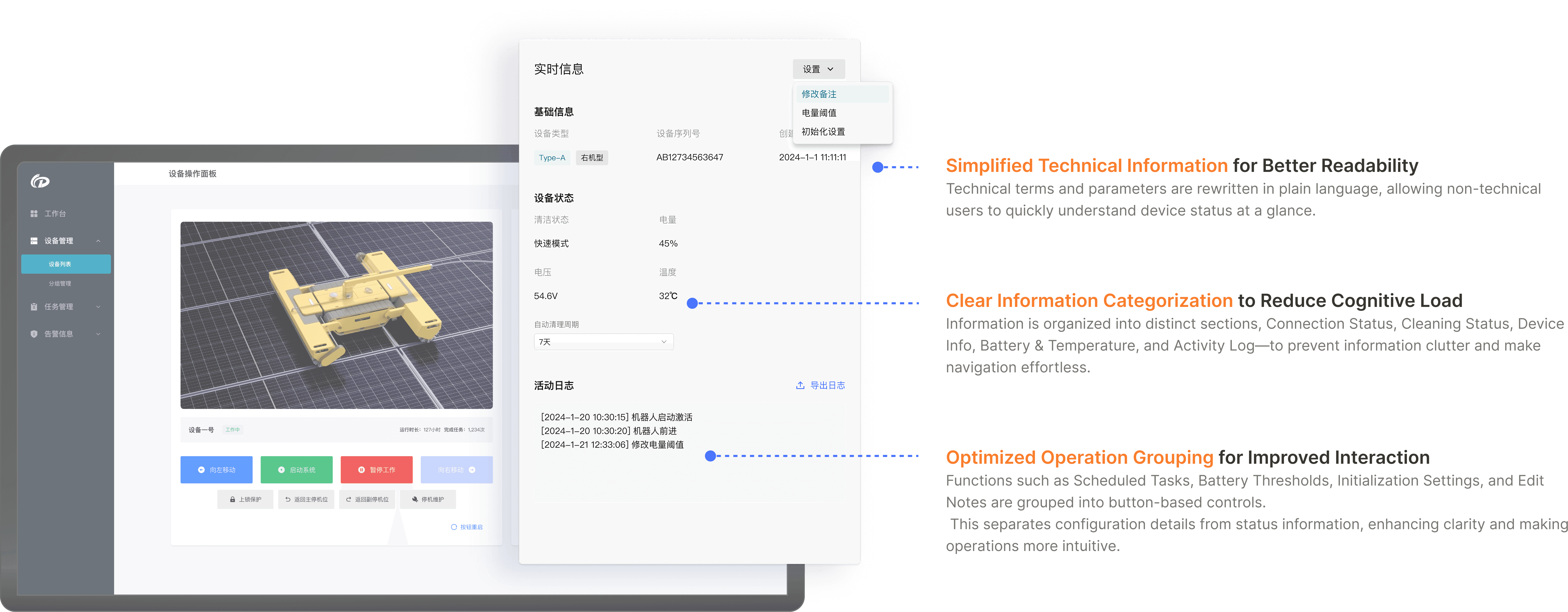
Readability Enhancement
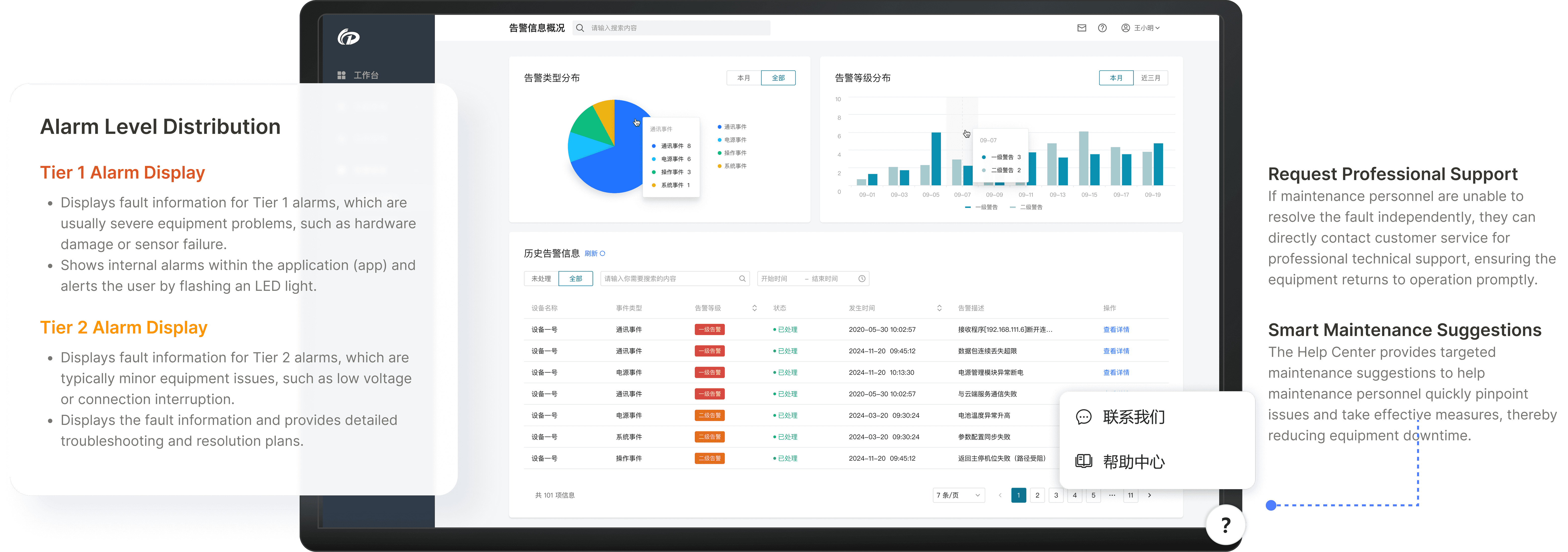
#03 Intelligent Alert System
Why: Alerts are not prioritized, leading to missed critical issues.
· Information Classification/Tiering
Count the number of alarms of each type, categorized by severity (Tier 1, Tier 2), to provide users with a quick overview of the current alert situation and its overall trend. Different alarm types are distinguished by color coding to enhance readability.
· Real-Time Status Monitoring
Includes alarm status filtering and a device search function, making it convenient for users to find abnormal conditions for specific equipment. It also provides a 'Handle Alert' operation to enable maintenance personnel to respond quickly.
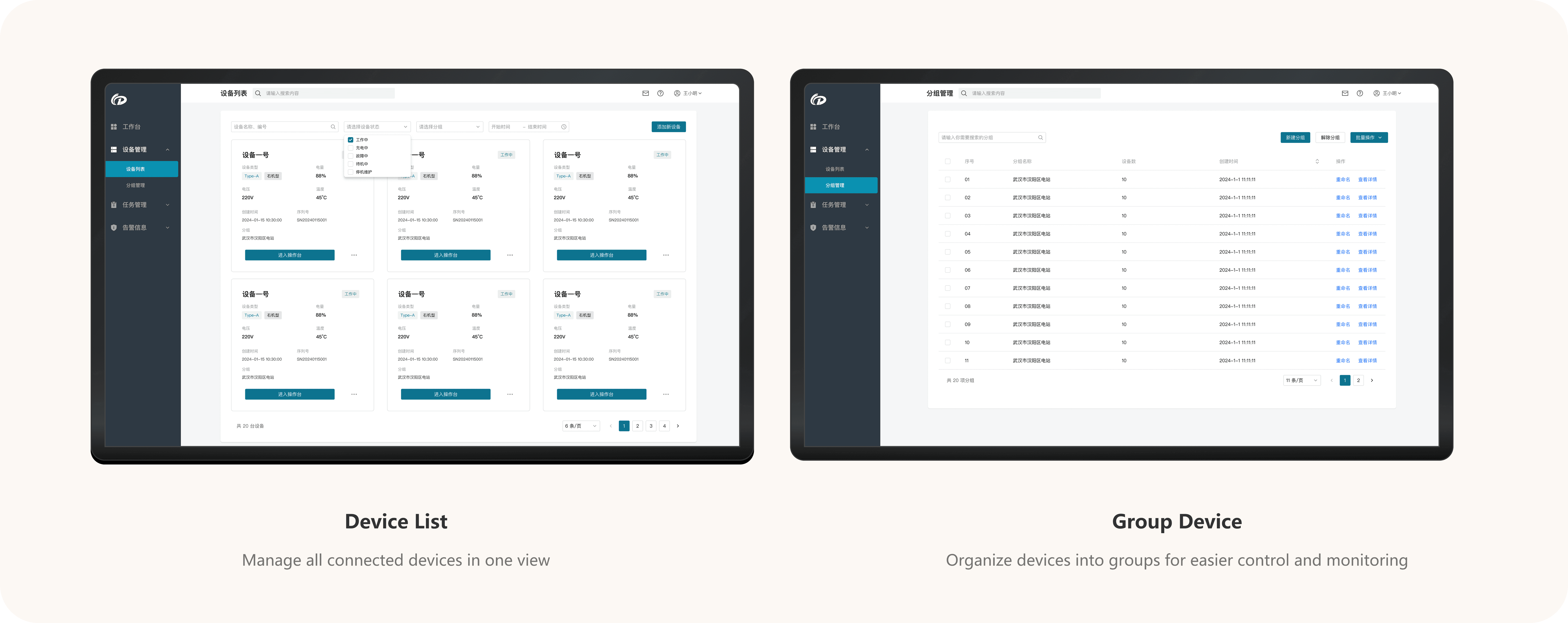
#04 Centralized Device Management
Why: Operators need a unified overview of multiple devices.

Visual Asset
Design System
Color Identificatioin
Design System
Color Identificatioin
Reflections
Designing for B2B requires clarity over aesthetics
I learned that B2B systems should prioritize information hierarchy and decision-making efficiency over visual decoration.
Balancing technical feasibility at a system level
When designing a suite of related products, higher-level system mapping becomes essential to ensure consistency and scalability.
Cross-functional collaboration requires structured alignment
Working with product managers and engineers taught me that alignment needs to be traceable. Clear documentation and structured communication significantly improve collaboration efficiency.
Grounding design in real user contexts
Field research is critical—without it, the interface risks being disconnected from actual user needs and operational realities.
Web Design
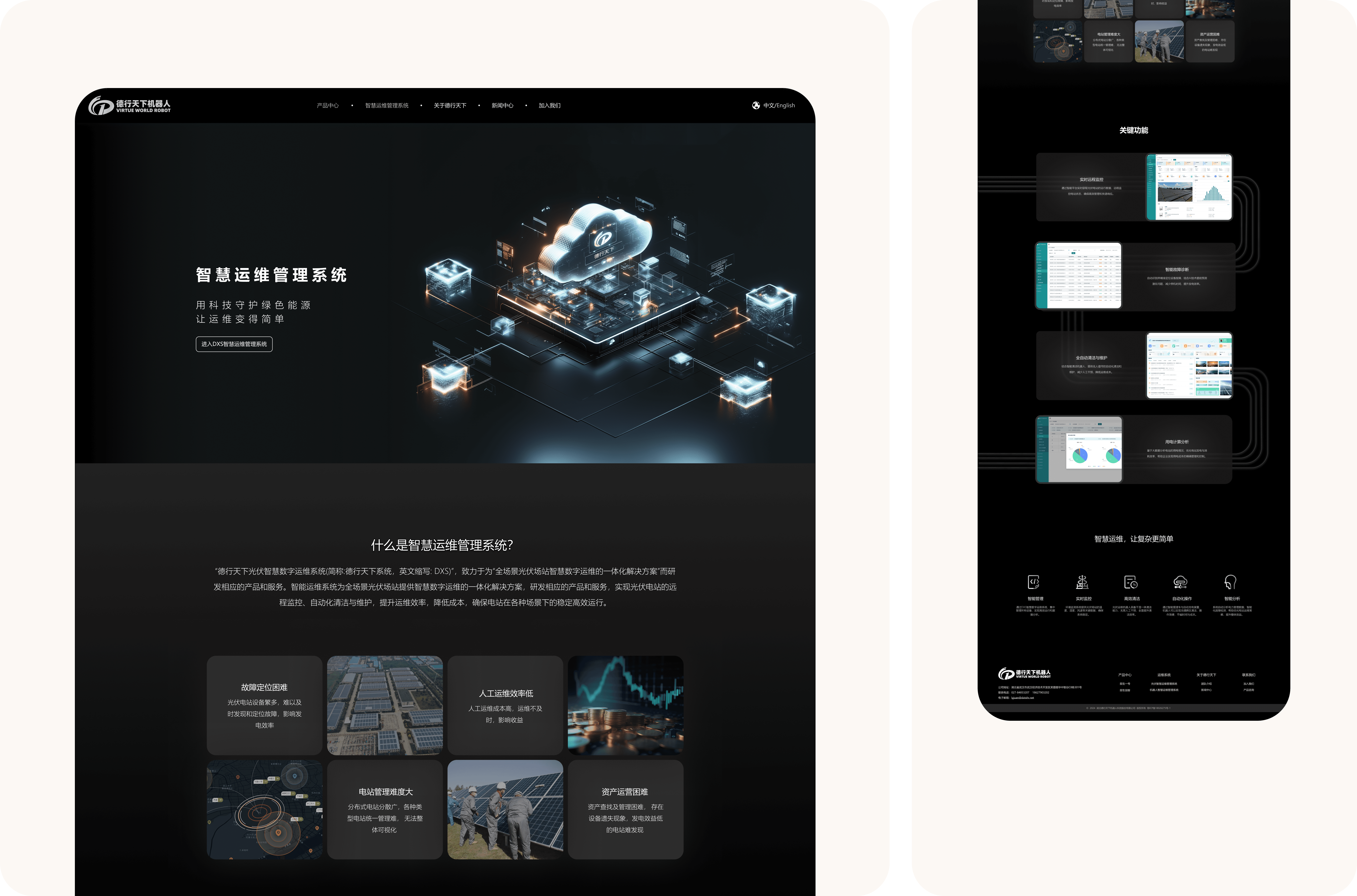
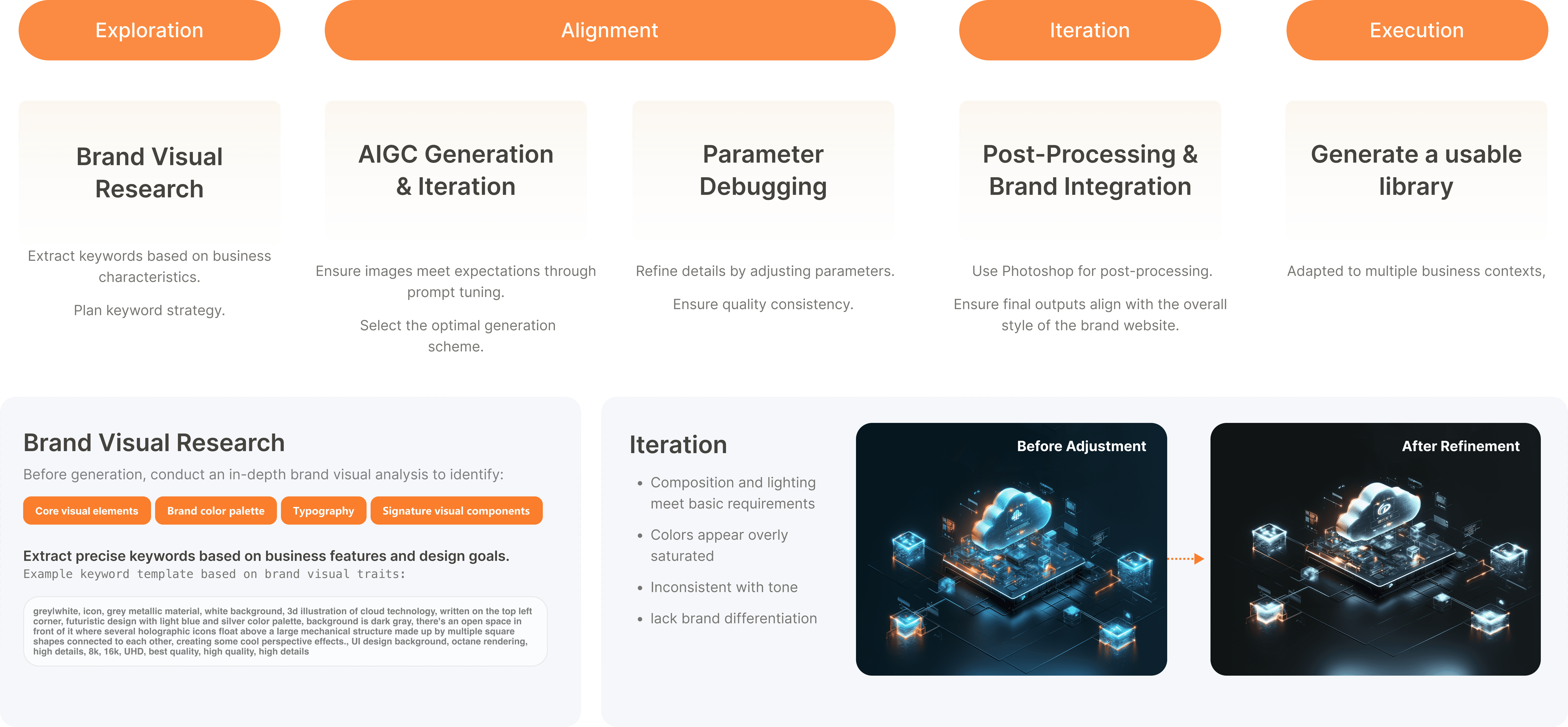
Midjourney Workflow Map
Reusable Workflow
Establish a scalable design system by accumulating reusable visual materials generated through AIGC tools. These assets can be adapted to multiple business contexts, maintaining both creativity and consistency.